
Lavender
Lavandula angustifolia
One of the most well-known and widely used species of aromatic and medicinal plants is lavender. It belongs to the genus Lavandula, whose name comes from the Latin verb lavare, meaning “to wash/clean,” as in Roman times it was used in baths to perfume the water and cleanse the body and spirit. In addition, in Greece, Persia, and Rome in antiquity, it was also used for disinfecting hospitals. The genus Lavandula includes about 39 species, of which only three are cultivated and commercially utilized.
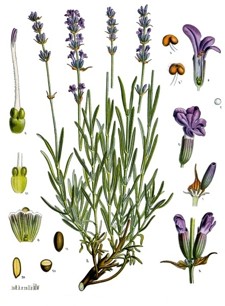
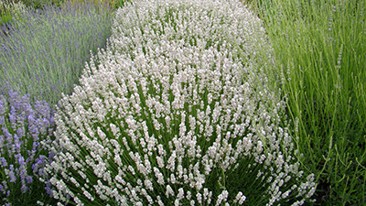
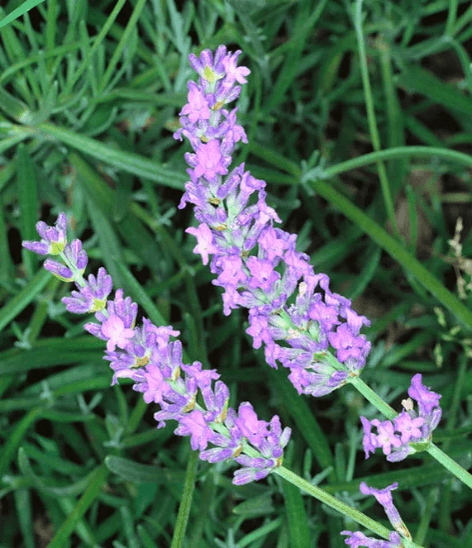
The most widespread species globally, cultivated both for its essential oil and for horticultural and ornamental purposes, is Lavandula angustifolia Miller. It is also known as English lavender, Lavandula, true lavender, or English lavender. It is a perennial evergreen shrub that reaches about 50 cm in height, with an upright, square stem 30–80 cm tall. Its leaves are narrow, especially compared to other varieties, hence its Latin name angustifolia, meaning “narrow leaf.” Its flowers range in color from purple to white, and more rarely pink or violet, with a blooming period from mid-June to July.
It grows wild in the mountainous regions of Italy, Spain, and France at altitudes above 1,500 m but is cultivated in fields of medium fertility under dry conditions. Lavandula angustifolia Miller shows great resilience and can survive in cold temperatures, even below –15°C.
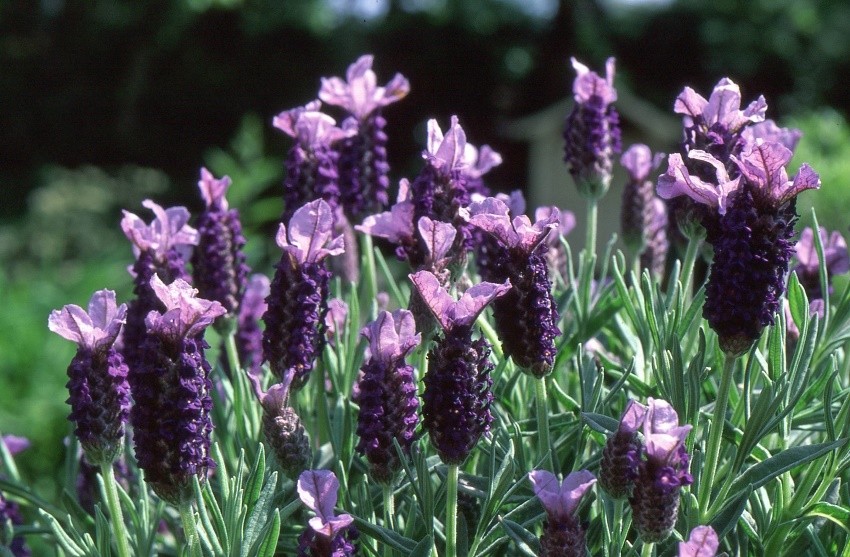
In Greece, the most common species encountered is Lavandula stoechas. Its English name is Spanish lavender, while it is also known locally as “wild lavender,” “mavrokefalo,” “hamolivano,” “lampri,” and “myrofora.” It is a perennial evergreen shrub that always grows naturally in acidic soil. In our country, it develops in Hymettus, Hydra, Zakynthos, Skopelos, Milos, Kimolos, Corfu, and in areas of Macedonia and Thrace. The stem is upright, square, and hairy, 30–70 cm tall. Its flowers are violet in color, and the blooming period lasts from May to September. This species, like Lavandula angustifolia Miller, can also survive low temperatures, even below –5°C.
The benefits of lavender and its healing properties are numerous, which is why it is applied in many fields. It is an aromatic, melliferous, and ornamental plant. It is widely used in perfumery and soap-making, and many lavender-based products can be found on the market—for example, room and clothing fragrances, soaps, sleep masks, and candles, as well as honey, chocolates, and Turkish delights. It is also consumed as an infusion, relieving headaches, helping with insomnia, stimulating the nervous system, and supporting healthy bowel function.
Lavender essential oil is known for its medicinal properties, and in particular, Lavandula angustifolia Miller produces essential oil of exceptional quality. Both its aqueous extract and essential oil have shown anticancer activity, and specifically, the essential oil can act against fungi and bacteria that affect food and skin. Furthermore, due to their volatility, essential oils can be used to combat stored-product pests, such as the common housefly. The aerial part of the plant is considered tonic, diuretic, antiseptic and antiasthmatic.