
Oregano
Origanum vulgare
The Latin name Origanum is a combination of the words “oros” (mountain) and “ganos” (brightness/joy), meaning “renewal of the mountain.” The plant Origanum vulgare L. is the oregano we all know, also referred to as agiorigani or wild oregano. Historically, Dioscorides mentions oregano as wild oregano and records its use as an antidote to bites from poisonous animals. He also describes its warming and soothing action, as well as its beneficial properties in stomach disorders, cough, and more.
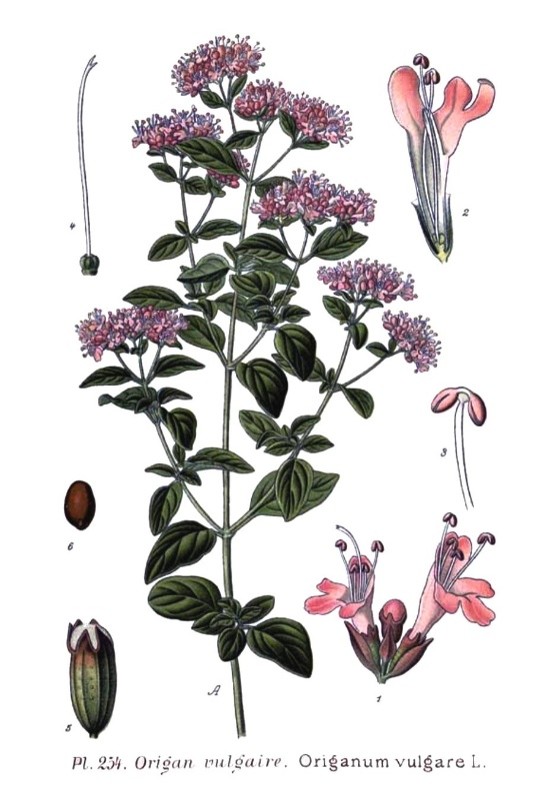
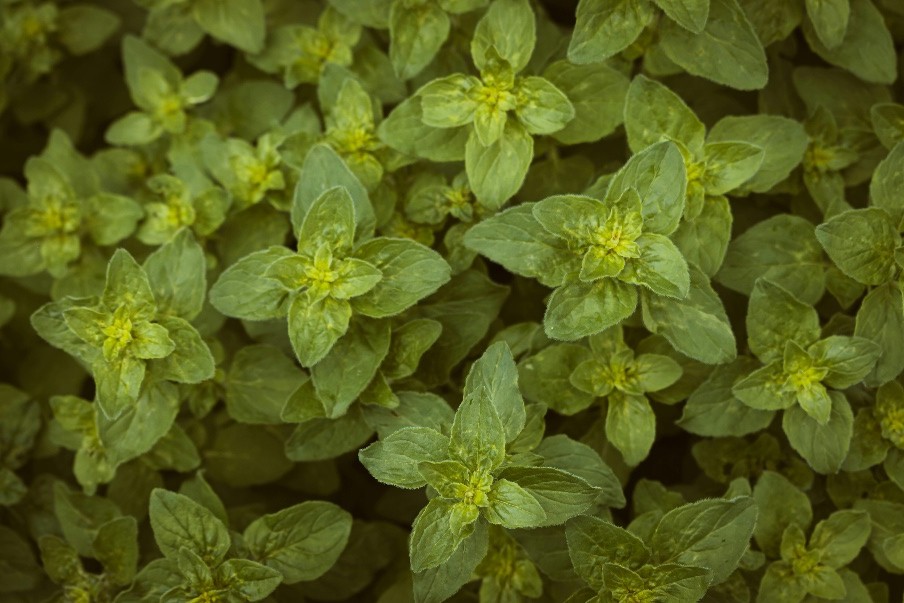
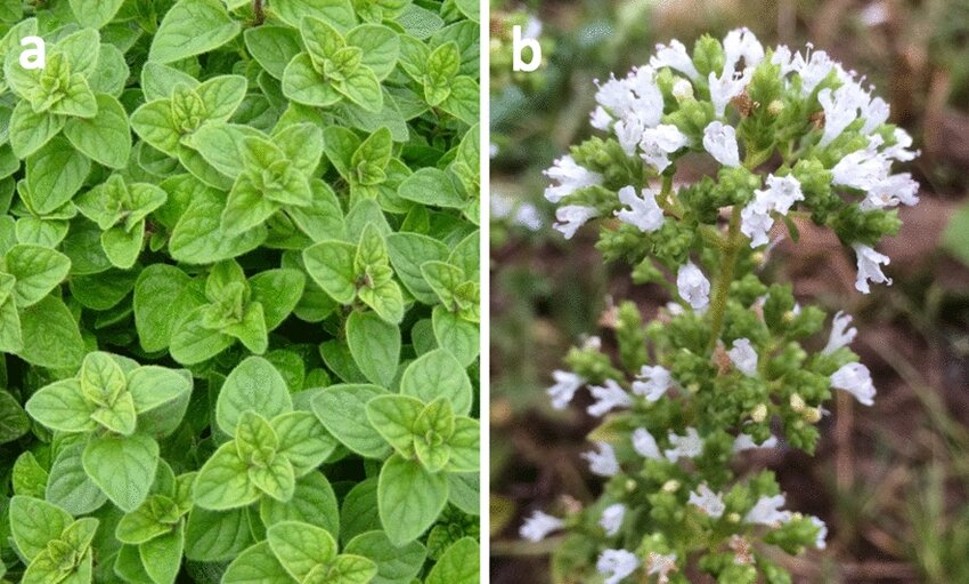
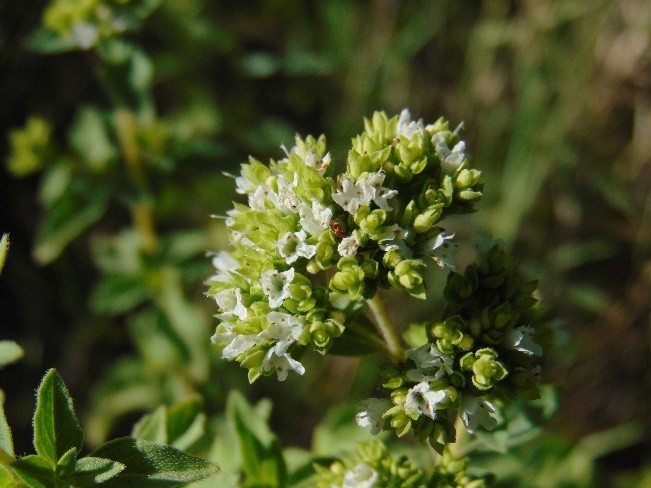
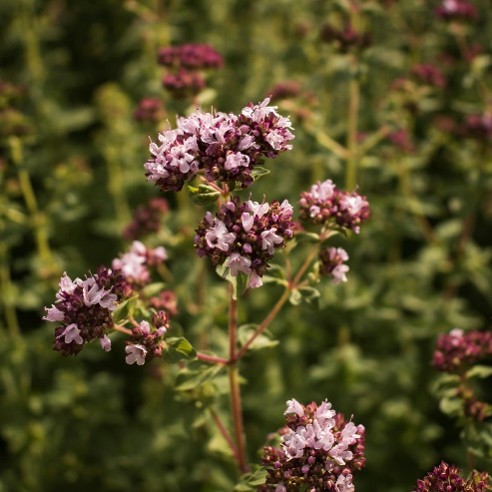
Oregano belongs to the family Lamiaceae and is an evergreen, perennial shrub. It is an aromatic plant, native and herbaceous, mainly to the Mediterranean and Asia. This particular species is widespread, from the Canary Islands, Madeira, and Europe to Eastern, Western, and Central Asia and Taiwan. Its height ranges from 20 to 50 cm, and under favorable environmental conditions, it can reach up to one meter in both height and width over 2 to 5 years. It is a shrubby plant, with a thin, hard, reddish, and brittle stem. The leaves of Origanum vulgare L. are petiolate, ovate or elliptical, small in size, and opposite. The flowering period extends from May to October, with white or purple flowers.
Oregano prefers well-drained, calcareous soils and grows from sea level to high mountain regions. It thrives in sunny locations but also tolerates partial shade, is quite resistant to dry environmental conditions, and requires minimal amounts of water. Pruning is recommended after the summer flowering season, and fertilization is not necessary.
Six subspecies of Origanum vulgare are distinguished, based on differences in characteristics such as the number of sessile glands on the leaves, calyxes, bracts, and flowers. Three of these subspecies thrive in Greece, and their distribution is related to the climatic conditions of each region. In Greece, the most common subspecies is hirtum, which has small green bracts and white flowers and is mainly found in Southern Greece and the islands. In Northern Greece, where the climate is continental Mediterranean, the subspecies viridulum and vulgare thrive. Viridulum has large green bracts, while vulgare has large violet bracts and pinkish-violet flowers. In general, Greek wild oregano shows resilience to a wide temperature range, from very cold conditions at -29°C to heatwaves of 42°C.
The plant Origanum vulgare L. is used as an ornamental plant in gardens but is also cultivated as edible. It can be found in gardens and pots, used for ground cover, in rock gardens or dry areas, and is an excellent beekeeping plant. Its essential oil and some extracts are also of great importance, as they have proven inhibitory effects on the growth of bacteria and fungi, even those causing foodborne infections. Because of this, oregano has been used not only as a seasoning but also as a preservative. Furthermore, the essential oil of Origanum vulgare L. is used in perfumery, liqueur production, and cured meats. In general, oregano can be used in various forms depending on the symptoms presented, including tea or tinctures used against colds, digestive or respiratory disorders, while also improving overall body health. Finally, there is also reference to inhaling steam for relief from toothache.