Mint
Mint (Mentha piperita), also known as Peppermint, is one of the most well-known aromatic plants worldwide. It is a sterile hybrid of the species Mentha spicata (spearmint) and Mentha aquatica (watermint). Its common English name is peppermint, and the species name piperita derives from its peppery taste. According to Greek mythology, it was named after Minthe, a nymph of Hades, whom Persephone dragged to the mountain now called Minthe (in southwestern Peloponnese) and crushed into dust when she learned of her relationship with her husband. Soon after, a strong aroma arose, and the mint plant appeared. Other sources mention that Persephone herself transformed her into mint when she discovered her affair with Hades, or that it was Demeter, goddess of agriculture, who did so at her daughter’s request.
Mint originates from China and Mediterranean regions. It is found as a wild plant in humid environments and riverbanks, but it can be cultivated everywhere. In Greece, it grows as a cultivated plant in both cool and warm areas. The main countries that dominate mint cultivation are the USA, Russia, Germany, England, China, Australia, and India.
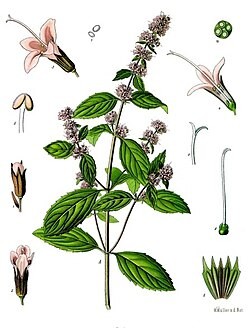
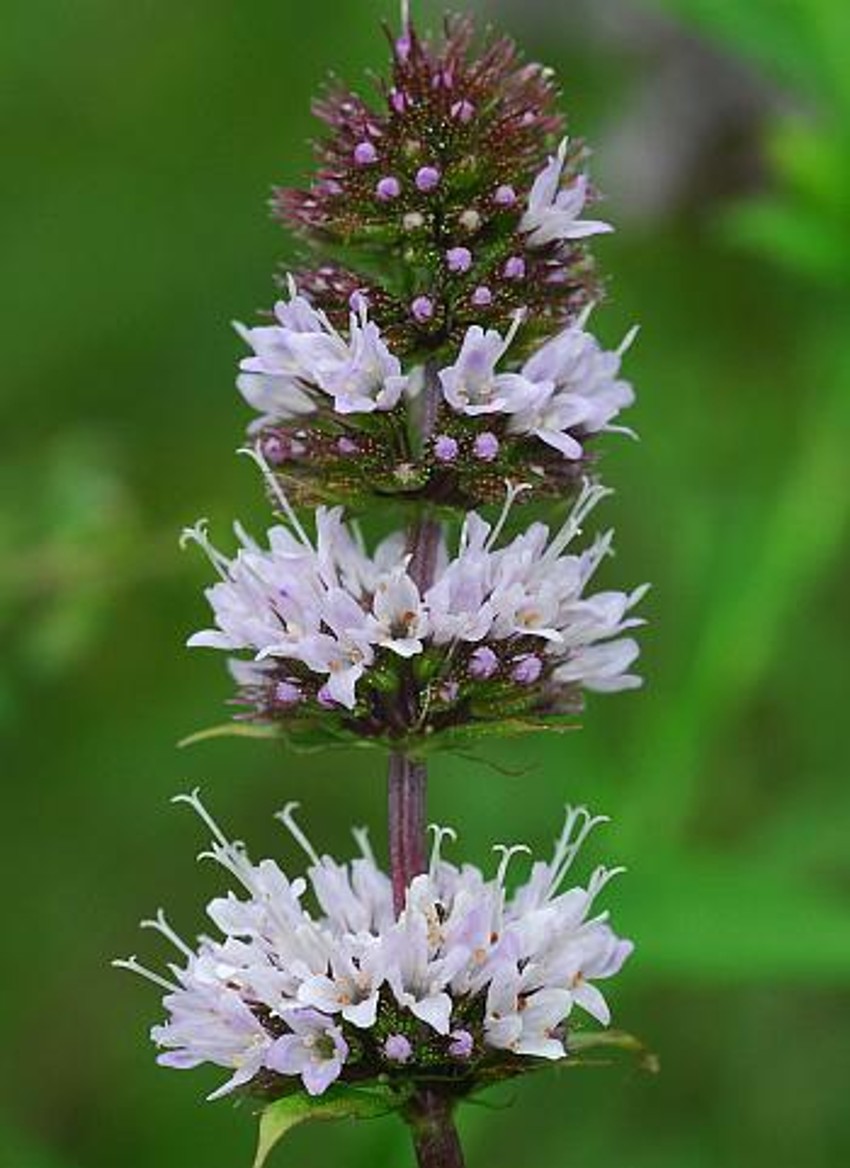
The Mentha piperita plant belongs to the Lamiaceae family. It is aromatic, herbaceous, and perennial. It reaches a height of 60–90 cm and has square, dark purple stems covered with white fuzz. The leaves are ovate-lanceolate, dark green, grow in opposite pairs, and are arranged crosswise. They have a strong, sweet aroma and remain on the plant throughout the year, except during periods of very low temperatures, when they may fall until conditions improve. Flowering stems reach 60–70 cm, bearing small violet flowers that bloom in summer (July to September) in spike inflorescences. Harvesting takes place in July and September for essential oil and dried herb production, respectively.
Mint can survive in a wide range of temperatures, with optimal conditions between 17–25°C and a minimum tolerance of -15°C. The ideal growth temperature is 17°C. It thrives in many soil types and climates, requires high water availability, and benefits from sufficient and frequent watering, especially to withstand summer heat. It also requires at least 14 hours of sunlight exposure to flower. It does not demand special cultivation care and is not particularly susceptible to insects and diseases.
Mint is cultivated and used for its dried herb and essential oil. The dried herb, due to its pleasant aroma, is consumed as herbal tea and used in cooking as a spice. Its beneficial properties have been studied and confirmed: it is recognized for its antimicrobial and analgesic effects, and is used against the common cold, insomnia, muscle spasms, and migraines. In addition, it has strong antibacterial, anticancer, and antiallergenic actions.
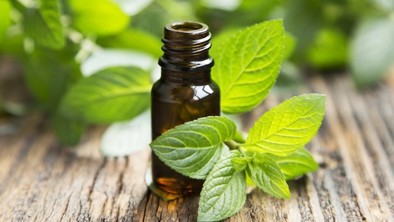
Apart from the above, Mentha piperita is widely known mainly for its essential oil, which is in high demand and has many applications. It is used in many sectors such as candy-making, beverages, confectionery, perfumery, and the pharmaceutical and cosmetics industries. It can soothe skin irritations, sunburns, throat irritations, fever, and muscle pains. Finally, it has antimicrobial, antispasmodic, anesthetic, and anti-inflammatory properties and contributes to good liver function.