
Chamomile
Matricaria chamomilla
Matricaria chamomilla L., also known as German or common chamomile, belongs to the Asteraceae family. It is one of the most widespread and well-studied medicinal plants, known since antiquity for its therapeutic properties.
The Latin name Matricaria chamomilla has an interesting etymological and historical origin, related to the plant’s properties and its use in traditional medicine. The word Matricaria comes from the Latin word matrix, meaning “womb.” This reflects the plant’s traditional use in treating gynecological issues, especially for relieving menstrual pain and uterine spasms. The plant was considered a “maternal herb,” friendly to the female reproductive system. The word chamomilla is a variation of the Greek word chamaimelon (χαμαί + μήλον): “chamai” means “on the ground, low,” while “mēlon” means “apple,” referring to the plant’s apple-like fragrance. Thus, chamaimelon means “apple of the ground” or “apple that grows low,” describing the appearance and pleasant aroma of its flowers.
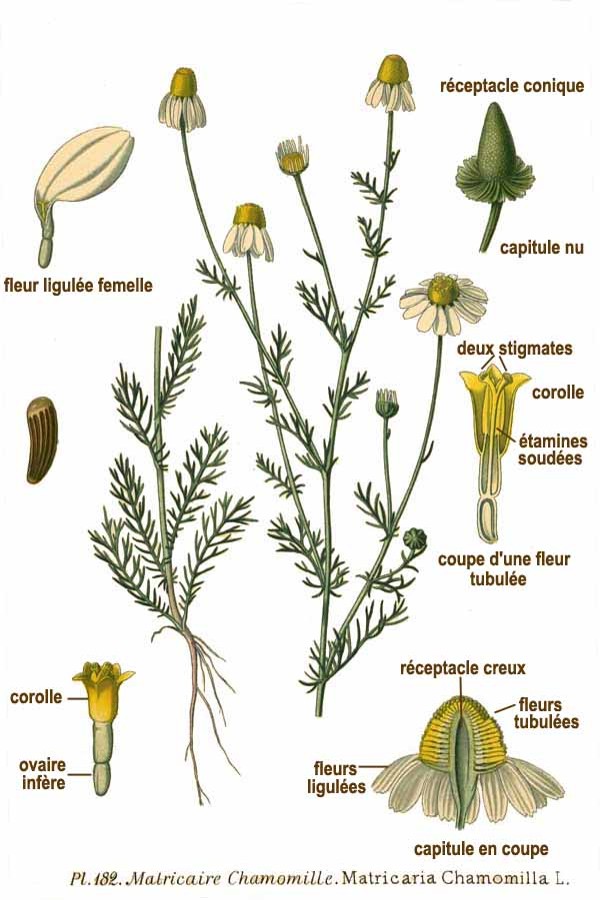
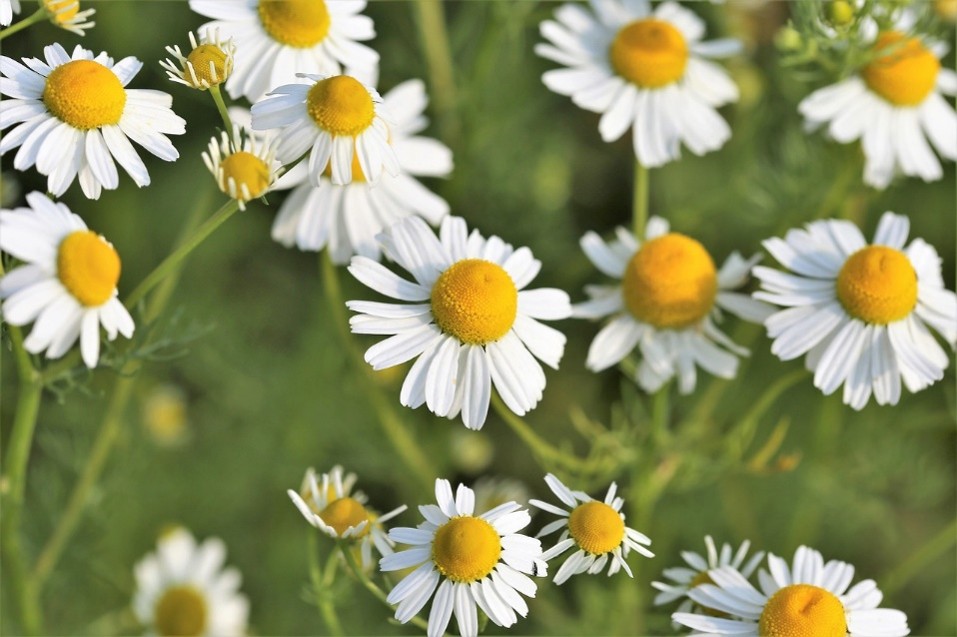
Matricaria chamomilla is an annual herbaceous plant, 20–60 cm tall. It has thin, branched stems and pinnate leaves with fine lobes. Its flowers resemble daisies: characteristic heads with yellow discs and white ray florets (petals), which bloom mainly from April to June. Its distinctive aroma is due mainly to the compound chamazulene, found in the plant’s essential oil.
Chamomile grows in a wide variety of soils but prefers light, well-drained soils with a neutral to slightly alkaline pH (6.0–7.5). It thrives in sunny locations and flourishes in areas with a temperate climate and moderate rainfall. The optimal temperature for seed germination ranges between 10–20°C.
In Greece, chamomile grows wild in meadows, roadsides, and fields, but is also systematically cultivated in regions such as Thessaly, Macedonia, and Thrace. Cultivation begins in spring with sowing or planting young seedlings. Flower harvesting takes place when the heads are fully developed, usually 30–40 days after flowering, and is done by hand or mechanically.
The yield per stremma (0.1 hectare) can reach 300–500 kg of dried flowers, depending on cultivation practices. The plant requires minimal input and has limited plant protection needs, as it is rarely affected by diseases or pests.
Chamomile is widely used in medicine, cosmetics, and nutrition. The dried flowers are rich in flavonoids, essential oils (mainly chamazulene and bisabolol), and other antioxidant compounds. Its anti-inflammatory, antispasmodic, antimicrobial, and mild sedative effects have been documented.
The most common use is as an infusion for relieving digestive problems, anxiety, mild insomnia, and sore throat. It is also used in dermatological preparations (creams, oils) for treating irritations, burns, and eczema. Furthermore, its essential oil is an ingredient in many cosmetic products.
In phytotherapy, chamomile has been recognized by the European Medicines Agency (EMA) and is included in the pharmacopoeia of several countries, including Greece. Clinical studies have shown that chamomile consumption may help reduce anxiety and promote healthy digestion, while its external applications are particularly useful for sensitive skin care.
Matricaria chamomilla is one of the most valuable medicinal plants with a long tradition and a wide range of applications. Its ease of cultivation and the high demand for natural products make chamomile important for modern scientific medicine.