
Lavender Cotton
Santolina chamaecyparissus
Lavender cotton (or Santolina chamaecyparissus) is the result of the natural hybridization of the species Lavandula officinalis and Lavandula spica, which is why it exhibits the main characteristics of these specific species. It is a plant native to the peri-Mediterranean regions and spread throughout Europe in the 16th century. Lavender cotton is found as a wild plant on calcareous mountain ranges of Southern Greece, Southern France, Southern Italy, Corsica, Southern Spain, and Algeria. It is cultivated throughout Greece and thrives in plains and semi-mountainous areas, as well as in fertile or moderately fertile soils.
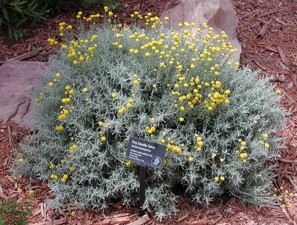
Lavender cotton belongs to the family Compositae (Asteraceae) and the order Asterales. It is an evergreen shrub with a woody, highly branched stem reaching a height of 20–50 cm. Its leaves are silvery-grey, sessile, and pinnatisect, and its flowers are yellow, borne in terminal inflorescences.
The root system of Santolina chamaecyparissus allows it to utilize very small traces of soil moisture, enabling the plant to thrive in very hot and dry areas. Notably, it also shows great resistance to winter frosts—even at temperatures well below zero—since it can grow in high-altitude mountains. However, lavender cotton is sensitive to late frosts, which is why it is preferable to plant it on the southern slopes of hills and mountains.
As for its soil requirements, it prefers calcareous soils but can also thrive in barren, gravelly soils that are unsuitable for other crops. It is highly sensitive to excessive moisture and does not grow well in acidic soils with poor drainage. Regarding fertilization, a combination of organic and inorganic fertilizers is recommended, while propagation is carried out by seed, cuttings, or offshoots. Especially through cuttings, plants with specific, stable, and desirable traits can be cultivated.
Lavender cotton is planted in autumn or spring and requires little cultivation care. It blooms from May to July, and production becomes satisfactory from the third year of establishment, though a small yield can also be obtained in the second year (Pierrakeas, 1971; Skoubris, 1998). It is a fairly disease-resistant plant, but if infected by the pathogen Phytophthora tentaculata, root and stem rot occurs.
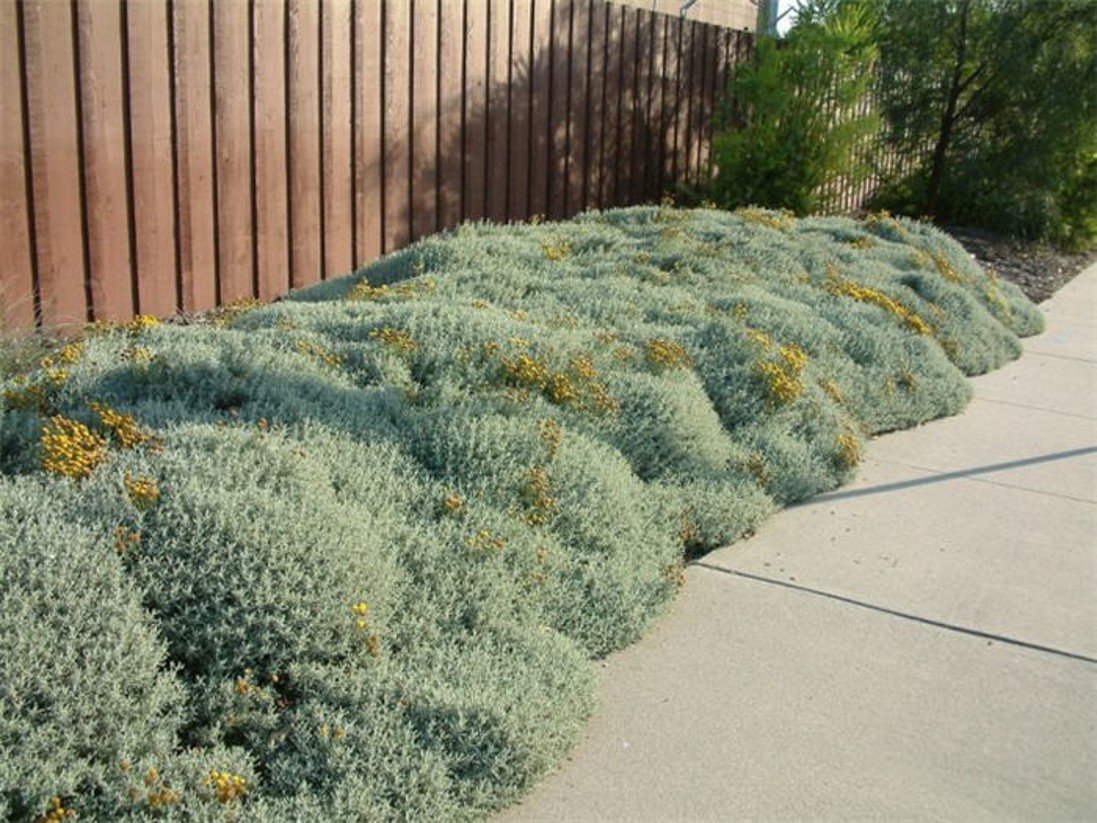
Lavender cotton is an aromatic, medicinal, and ornamental plant. Thanks to its silver-grey foliage and fragrance, it is mainly used as a decorative plant, ideal for creating low borders in gardens, rock gardens, gravel gardens, and stone walls. It is also preferred in coastal areas due to its drought resistance, as well as in aromatic gardens, and it can be used as ground cover, particularly in combination with other drought-tolerant plants.
The aerial part contains essential oil, which is used in perfumery and soap-making. Although there are not enough official studies examining and analyzing the properties of lavender cotton, it is widely known that its oil has therapeutic properties and is used as a medicinal ingredient, exhibiting analgesic, anticancer, anti-inflammatory, antimicrobial, antioxidant and antispasmodic effects.