Marjoram
Marjoram, or Origanum majorana, is a perennial herbaceous shrub that grows wild in countries of Southern Europe and Northern Africa. In Greece it does not grow naturally, but it is cultivated in gardens and pots as an ornamental plant, while in other countries it is grown systematically. In ancient Greece, it was known as a remedy for stomach and intestinal disorders.
The genus Origanum includes about 30 species, most of which belong to the Mediterranean flora, with some extending to Asia. In Greek flora, the following 7 species are included: Origanum heraklooticum (oregano), Origanum vulgare (oregano), Origanum onites (island oregano), Origanum maru (Syrian oregano), Origanum dubium Boiss. (wild oregano), Origanum majorana (marjoram), and Origanum dictamnus (dittany).
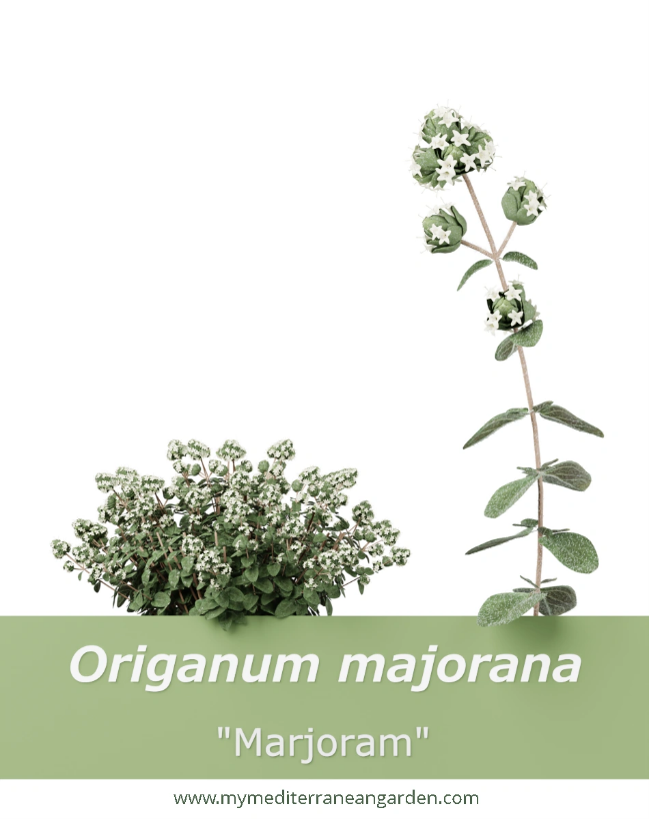
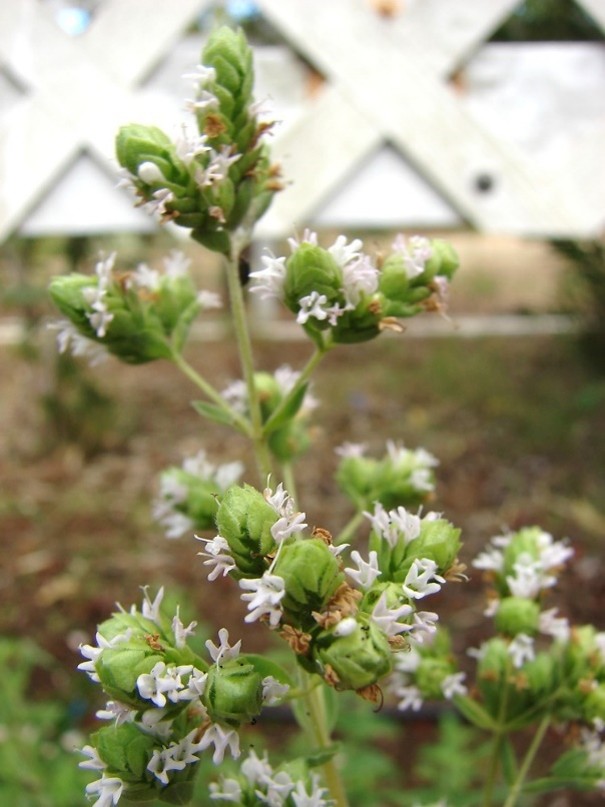
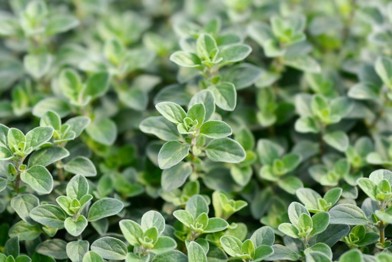
Morphologically, marjoram resembles oregano but has a distinct aroma. Its height reaches 20–40 cm, with many branches and a spherical shape. The leaves are small, entire, oval, and oppositely arranged on the stem, with a strong pleasant fragrance. Their color is grayish-green, lighter green on the upper surface and whitish-green on the underside. The flowers of marjoram are small, whitish-green or pink, and grow in the axils of the leaves along the stem as well as at its tip. The flowering period lasts from July to October.
Origanum majorana thrives in regions with mild climates, while in colder climates with temperatures below –12°C its growth is particularly difficult. The ideal growing conditions for marjoram are coastal and island areas, as well as rich, well-drained soils. It is highly drought-resistant and can grow without irrigation in cool, permeable soils. Regarding cultivation, it can maintain stable production for 5 to 6 years and requires a good amount of nutrients.
The harvesting period depends on the purpose of cultivation. If grown for its essential oil, harvesting takes place once at the full flowering stage, when the entire aerial part of the plant is cut. If the final purpose is the production of dried herb, harvesting takes place twice a year, each time before flowering begins, usually in June and August.
Marjoram is used in various fields. It is widely used in cooking as a spice, can be added to salads, and is also used as a flavoring in vinegars. It is consumed as an infusion, mainly for its tonic properties, and acts against indigestion and headaches. It also relieves insomnia, asthma, cough, and colds. It has antispasmodic, antiemetic, and sudorific properties, and can be beneficial in urinary tract disorders. Additionally, it can serve a decorative role and is considered a bee-friendly plant. The essential oil of marjoram is of particular interest, as it is used in perfumes and cosmetics.