
Creeping Rosemary
Rosmarinus officinalis prostratus
The Latin name Rosmarinus comes from the words ros, meaning “dew,” and marinus, meaning “belonging to the sea,” i.e., “sea dew.” However, the prevailing view is that the interpretation of the word comes from folk etymology, with the most accepted Greek words being rhops, meaning “shrub,” and myron, meaning “balsam.” The Greek name “dendrolivano” (“rosemary”) is derived from the words dendro (tree) and livano (incense), due to its scent reminiscent of incense.
Rosmarinus officinalis ‘Prostratus’, commonly known as creeping rosemary, is a wild plant found on rocky mountains in various Mediterranean countries such as Greece, Spain, southern France, and southern Italy. In Greece, it grows wild in rocky areas of the Peloponnese, Epirus, and some islands. As a cultivated plant, it is grown in vegetable and flower gardens, primarily for culinary use.
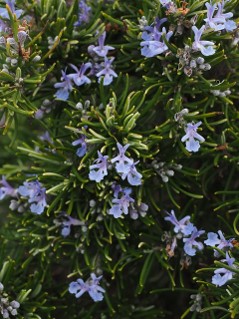
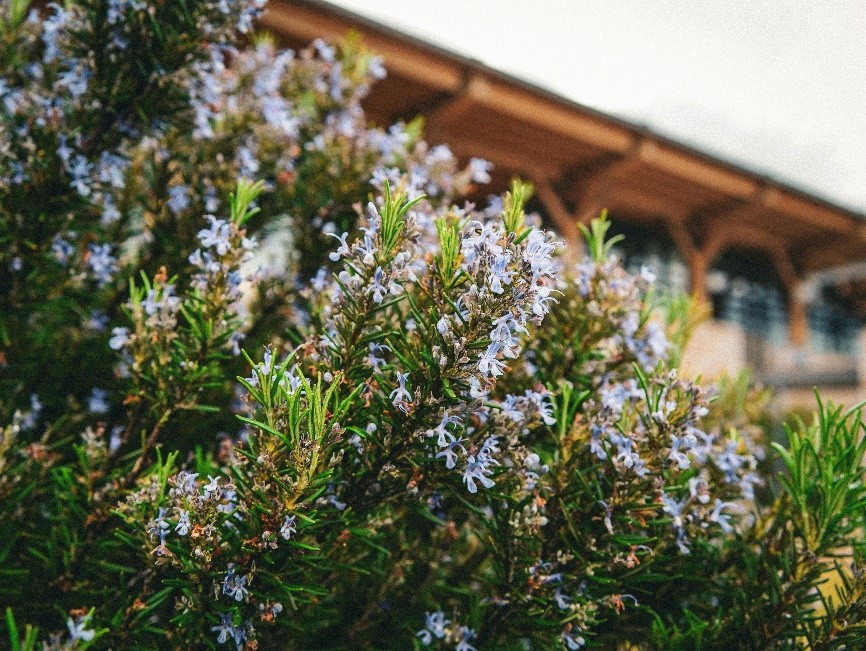
Creeping rosemary belongs to the family Lamiaceae and the class of dicotyledons. It is an evergreen perennial shrub with dense, low growth. Its height can reach up to 50 cm, and its width can extend to 2 meters. It exhibits strong branching, with densely leaved, laterally spreading stems. The leaves of Rosmarinus officinalis ‘Prostratus’ are linear, sessile, opposite, and deep green in color. They remain on the plant year-round and release a characteristic aroma when rubbed. Its flowers emerge in clusters during the summer, in whorls at the leaf axils, with white or pale blue color, and a length of 6–12 mm.
It shows high drought tolerance and grows best in warm areas. It thrives in almost all soil types, provided there is good drainage. However, under irrigated conditions or in moist soils, it grows faster and flowers multiple times a year. Rosmarnius officinalis ‘Prostratus’ can tolerate temperatures from 0 to –10°C without serious damage to the plant, but below –10°C, the above-ground parts are destroyed.
In general, it is a long-lived plant, and its cultivation can be practically unlimited. Propagation can be done by seeds or cuttings. Commercially, propagation via cuttings is preferred, as it ensures that the new plants are identical to the parent plant. Additionally, creeping rosemary is resistant to insect and fungal attacks, although in cold and humid conditions it may be affected by powdery mildew.
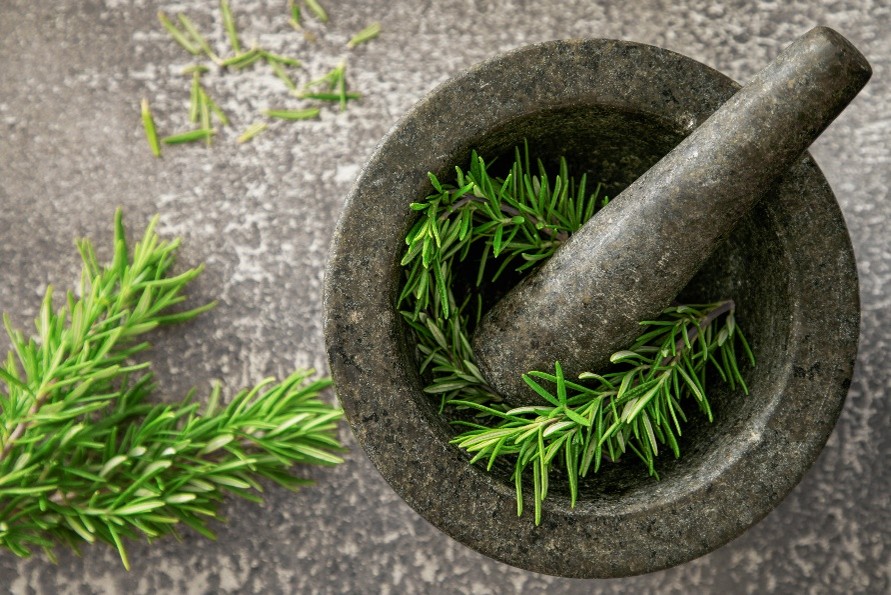
Regarding the processing of Rosmarinus officinalis ‘Prostratus’ plant material, the resulting products are fresh herb, dried herb, and essential oil, and the harvest period depends on the desired product. In Greece, harvesting can be done in two or three cycles per year: the first in May, the second at the end of July, and the third in early October. For fresh herb production, harvesting is done at the stage of new growth when the shoots are small and green. For dried herb, harvesting occurs before flowering, so that only leaves and no flowers are collected. For essential oil, the best period is from mid-May to late July, i.e., during full flowering, which ensures the highest essential oil content.
Creeping rosemary is an aromatic, medicinal, and bee-friendly plant. In cooking, its leaves and flowers are used as seasoning. It is also considered tonic, antispasmodic, calming and antidiabetic. Its essential oil is widely used in soap-making and pharmaceutical manufacturing. It is also used as an ornamental plant in urban and country gardens, in flower beds, jardinieres, borders, hanging on balconies, or even as ground cover.