
Calendula
Calendula officinalis
Calendula (Calendula officinalis L.) is one of the best-known annual plant species in the category of Aromatic and Medicinal Plants. Its scientific name comes from the Latin word kalendae meaning “calendar,” referring to the plant’s ability to bloom at the beginning of most months of the year. It is widely known as pot marigold or simply marigold, considered to be “Mary’s Gold,” i.e., the flower with the color of the Virgin Mary’s Sun.
In Greece, however, it is also known as nekrolouloudo (“funeral flower”), katifes, old woman’s spindle, or “poor man’s saffron.” Apart from C. officinalis, Greece is also home to C. arvensis and C. suffruticosa. It is believed to originate from the Mediterranean regions up to Iran.
According to the Greek biodiversity database “Filotis” (https://filotis.itia.ntua.gr/), calendula is not considered a threatened species and does not require special protection.
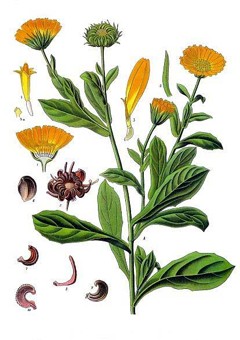
This plant is annual (sometimes biennial), herbaceous, with tender, slightly hairy stems. It can reach a height of 40–50 cm, bearing alternate, sessile leaves about 10 cm long, elongated, oval, gray-green in color, fleshy with fine marginal hairs. The flowers, typical of the Asteraceae family, measure 3–7 cm in diameter and range in color from yellow to orange. Its seeds have a distinctive hook-like shape, while the central taproot, bearing many fine rootlets, can grow up to 20 cm long.
C. officinalis can be cultivated for its flowers, leaves, and oil-rich seeds. It thrives in most climates with temperatures above 18 °C and shows high tolerance to heat, provided that sufficient irrigation is available. The ideal soil pH for the plant is strictly 6–7, and deviation from this range is not recommended.
Calendula is renowned for its multiple properties and actions, attributed to its phytochemical composition. Its active constituents are divided into volatile and non-volatile compounds. The volatile compounds include those found in the plant’s essential oil, which has many applications in various fields.
The European Medicines Agency (EMA) has included calendula in its monographs, recognizing its use in treating minor skin inflammations, wound healing, and inflammations of the mouth and throat. Additionally, flower preparations have been listed by the European Commission among herbal medicinal substances.
Calendula has a wide range of beneficial properties and uses, making it applicable in many fields.
- Medicine: Mainly used for its wound-healing effects, insecticidal action, and antioxidant, anti-inflammatory, and anti-edematous properties. It supports the immune system, has demonstrated dual anticancer and lymphocyte-stimulating activity, and offers hepatoprotective effects. It also shows antibacterial, antifungal, and antiviral activity. Studies indicate that this plant can slow heart rate and may contribute to anti-HIV action.
- Food industry: Used as a substitute for Crocus sativus (saffron) and as an ingredient in salads. Widely consumed as an herbal infusion, it is also applied in coloring cheeses and butter (Deans & Simpson, 2003).
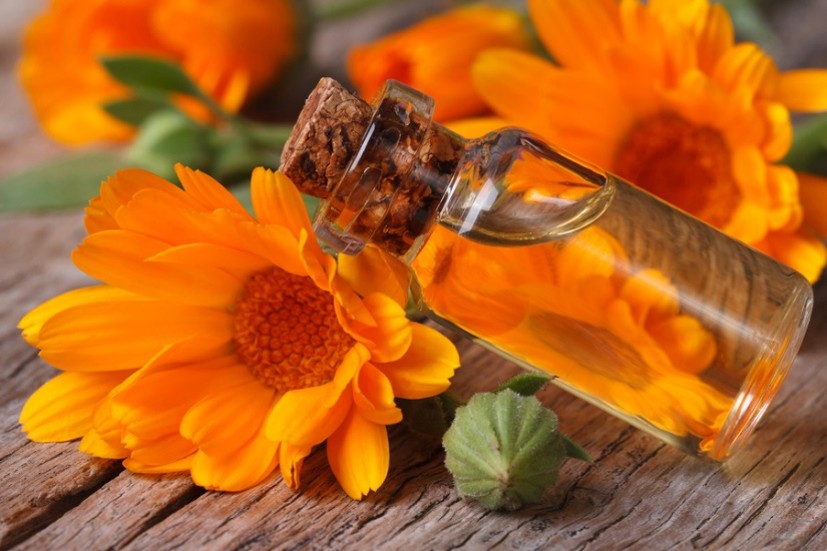
- Cosmetics: A key ingredient in many cosmetic products such as face and body creams, lotions, gels, care oils, and shampoos.
- Other uses: Applied in painting (as a natural pigment), in crop protection against pests, and in wood preservation as a coating material.