
Lemon Balm
Melissa officinalis
Melissa officinalis is a perennial herb native to the Mediterranean countries of Europe. It is believed to have originated in southern Europe, while it is also found in regions of North Africa. In Greece, it grows wild in moist lowland and mountainous forested areas at altitudes up to 800 m in Thrace, Macedonia, and on islands of the Ionian Sea. It is cultivated in southern and northern Europe, in America, and in western Asia.
The scientific name of the species is Melissa officinalis, while its common English name is lemon balm. It is also known in Greek as melissovotano, melissaki, melissa, and kitrovalsamo, names derived from its property of attracting bees.
In ancient Greece and Rome, lemon balm was added to wine and could be consumed orally or applied topically to treat insect stings, bites, and wounds. According to Ayurvedic medicine, it may help in the treatment of indigestion linked with depression and/or anxiety. In antiquity, it was also used as a tonic, antispasmodic, antidiarrheal, against stress-related headaches, and in the management of neurological disorders. Written sources also mention an extract based on lemon balm, referred to as the “elixir of life.” Among the Hebrews, its essential oil was known as bal-smin and was considered the “oil of oils.”
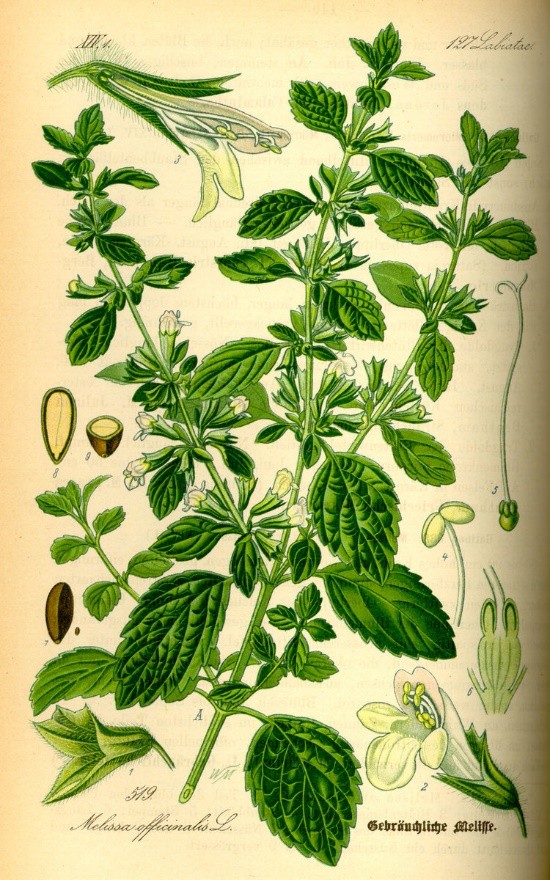
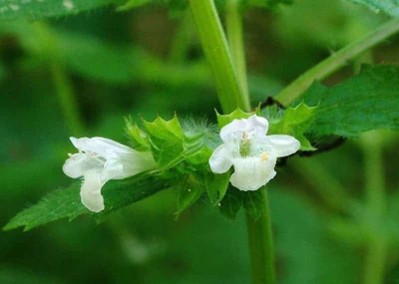
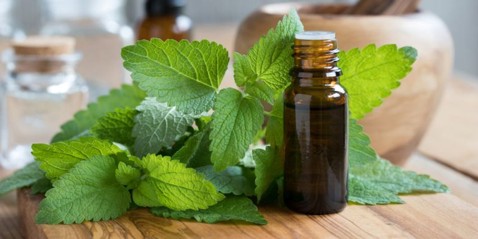
Melissa officinalis is a perennial herb with a square stem covered with sparse hairs. It is highly branched and reaches a height of 30–80 cm. Its flowers are bilabiate, small, and borne in clusters, varying in color from white and pale pink to yellow depending on the variety. Flowering occurs in summer, from June to August. Its leaves are heart-shaped, with a rough surface, slightly serrated edges, a long petiole, and a distinctive lemon scent. Lemon balm yields very little essential oil, making its production costly and its market price particularly high.
The leaves, which constitute the herbal drug, have an interesting and complex composition responsible for many of the plant’s pharmacological properties. Today, specialists often recommend its use as an infusion for treating stomach disorders, migraines, and also as a memory enhancer. Plant extracts exhibit antioxidant, anti-inflammatory, astringent, and antibacterial activities. Importantly, lemon balm essential oil has been studied for its potential in inhibiting cancerous tumor growth, alleviating herpes symptoms, and in the treatment and prevention of Alzheimer’s disease.
Finally, extracts and essential oil of Melissa officinalis are also used beyond the pharmaceutical field, particularly in the food industry, perfumery, and cosmetology. In food technology, extracts can serve as antioxidants that prevent lipid and protein oxidation, while helping preserve the color, aroma, and texture of products.