
Thyme
Thymus vulgaris
Thyme is found both as a wild plant and as a cultivated one all around the world. Thymus capitatus Hoff. et Link, also known as Greek thyme, is one of the best-known species and grows wild in several parts of Greece, as does Thymus serpyllum L. (wild creeping thyme), which is mostly found in mountainous areas. Another widely known species, cultivated in Greece, is common thyme (Thymus vulgaris L.), which is the main subject of this reference.
The word Thymus originates from ancient Egypt, from tham or thm, referring to a type of thyme used at that time. In Greek it was called thoumos and Latin-thymo. The Latin word vulgaris means “common,” hence the name “common thyme.” As mentioned, thyme has been known since antiquity and began to be used as medicine in the 16th century. Today it is cultivated and used both for its aromatic and medicinal properties.
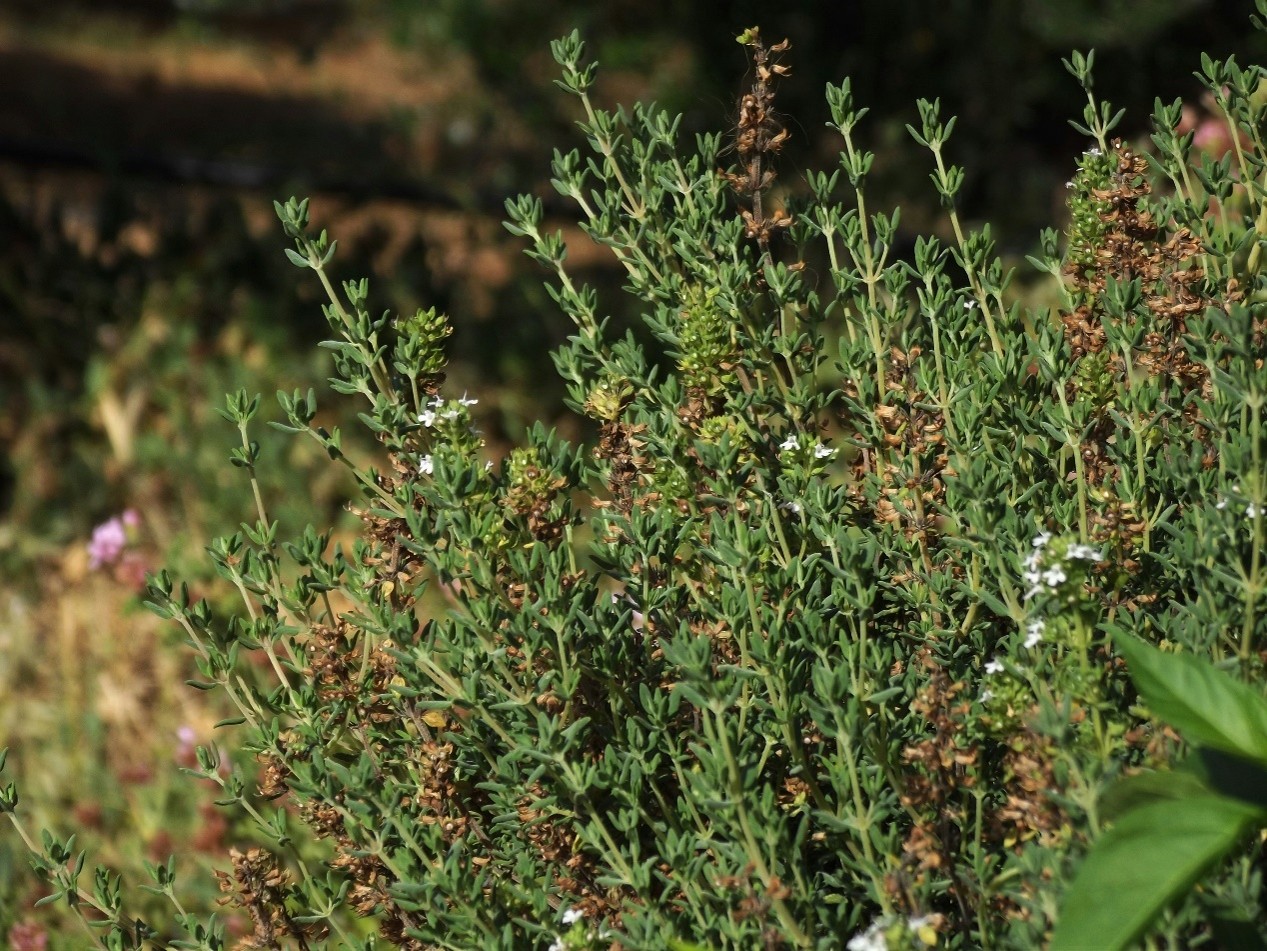
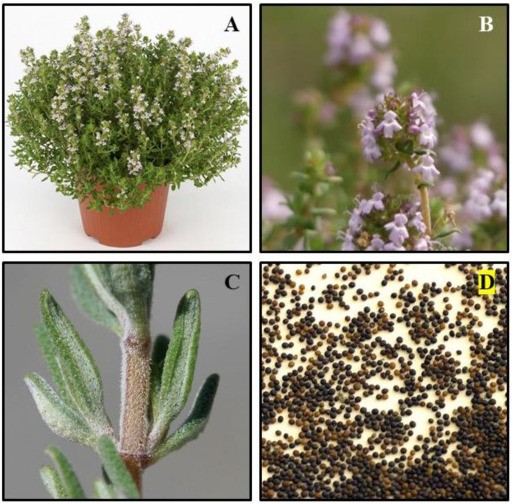
Thymus vulgaris L. is a small woody aromatic shrub belonging to the mint family (Lamiaceae). Its height ranges between 20–40 cm, with square stems. Its leaves are gray-green, small, and very aromatic, while its flowers are small, borne in inflorescences forming corymbs, usually pink, reddish, or white in color, and are very rich in nectar. Thyme grows mainly in semi-mountainous areas, but it can also thrive in both warm and cold regions. It prefers areas where the average temperature in spring and early summer ranges between 20–30 °C and requires full sun exposure. The lowest temperature it can withstand is –32 °C, at which point it sheds much of its biomass.
Thyme grows well in dry areas, but in irrigated fields it produces much higher yields of lower quality. It prefers neutral to alkaline soils, with good drainage and minimal moisture. Its water requirements are moderate to very low, even during drought periods. It is sensitive to botrytis rot and root rot, and can also be affected by mites and aphids.
Propagation of Thymus vulgaris L. is done by seed, offshoots, or cuttings. Planting is carried out in autumn or spring, and cultivation can last 7 to 8 years in the same field if the appropriate soil and climate conditions prevail and the necessary cultivation practices are applied. Fertilization is required annually, as well as weed control. The ideal harvest period is in June, when thyme is in full bloom.
Thyme is cultivated for its dried herb and essential oil. The dried herb is consumed as an infusion and mixed with other aromatic plants such as sage and mint. Its essential oil is used in perfumery. It is also widely used in the food industry, providing better flavor and aroma to products, and in medicine as an antiseptic due to its strong active compounds. Furthermore, it is considered deodorant, digestive, emmenagogue, and tonic, while also being one of the best-known bee-forage plants. Finally, it is used as an ornamental plant in gardens, suitable for ground cover, borders, and planters.